

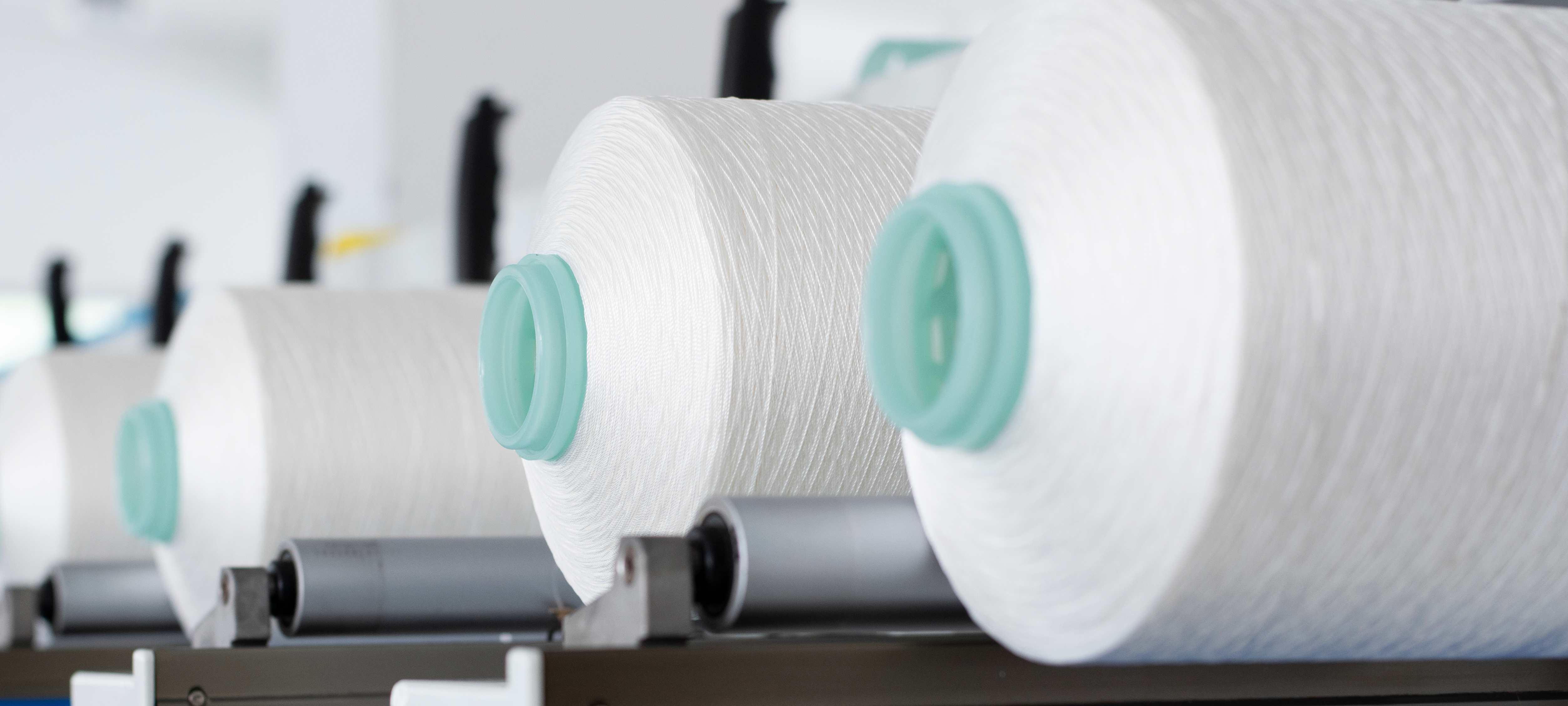
Dye package precision winding of twisted filament polyester and nylon 6.6 high tenacity thread, also called soft cone winding, is one important step bringing raw white twisted yarn or thread to dye tube, for further dyeing.
I. What is Dye Package Precision Winding?
In the dye package winding process, precise control of winding tension and speed ensures that filament sewing thread is wound with low and uniform tension, resulting in a soft, fluffy, and low-density package (cheese or soft cone). The primary objectives of winding are:
1. To Create Space for Dyeing: The soft package structure allows the dye liquor (typically water flow under high temperature and pressure) to penetrate the inner and outer layers of the package easily and uniformly, ensuring level dyeing without blotches or color differences.
2. To Protect Thread Quality: If filament threads (especially synthetic filaments like polyester and nylon) are wound under high tension and then dyed, the high temperature can cause a "setting" effect, leading to:
● Loss of elasticity and elongation.
● Thread breakage during sewing.
● Tight, inflexible stitches.
● Color differences between the inner and outer layers of the package due to uneven tension.
To Ensure Smooth Unwinding in Subsequent Processes: After dyeing and drying, the thread from a soft-wound package retains good loftiness and elasticity, enabling smooth unwinding on high-speed sewing machines and reducing breaks and tension fluctuations.
II. Key Technical Requirements and Challenges
Achieving high-quality dye package soft winding for filaments is challenging and requires precise control of the following parameters:
1. Low and Constant Winding Tension:
This is the core technology. Tension must be sufficiently low (typically 1/3 to 1/2 of conventional winding) to ensure a soft package.
Uniformity is crucial. Tension fluctuations from the empty tube to the full package, and from the inner to the outer layers, must be minimized. Otherwise, uneven package density can cause "streaks" during dyeing.
2. Precise Tension Control System:
Modern precision winding machines use closed-loop electronic tension control systems. Tension sensors monitor the yarn tension in real-time, providing feedback to the control system to dynamically adjust the output of brakes (e.g., magnetic particle brakes, servo motors), achieving precise control at the centi-Newton (cN) level. farerthread.com
3. Special Winding Formation Mechanism:
Precision grooved drums or precision winding technology are employed. The groove design of the drum precisely guides the yarn lay, ensuring good package formation and smooth unwinding.
The winding angle and winding ratio need optimization to form a stable yet soft "network" package structure.
4. High-Quality Dye Tubes (Cheeses Dyeing Cone):
Specialized dye tubes (usually made of polypropylene or stainless steel) that withstand high temperature and pressure and have excellent permeability must be used. The tube body is filled with regularly arranged holes to ensure unobstructed flow of dye liquor.
The tube's geometry and strength must prevent deformation under pressure on the dyeing beam.
5. Environmental Control:
The workshop must maintain specific temperature and humidity levels to prevent filament entanglement or fuzzing due to static electricity, or brittleness due to excessive dryness.
III. Process Flow and Equipment Characteristics
The typical dye package winding process flow is as follows:

Characteristics of precision winding equipment include:
● Individual drive and control for each spindle.
● Equipped with high-precision electronic tensioners and yarn clearers (e.g., Uster Quantum).
● User-friendly HMI for setting and storing various process parameters.
● Data collection functionality to monitor production efficiency and quality.
IV. Quality Evaluation Indicators
A qualified soft-wound filament sewing thread package should meet the following criteria:
1. Appearance and Formation: The package surface should be smooth, free from defects like cobwebbing, raised edges, collapsed edges, or ribboning. farerthread.com
2. Density and Hardness: It should feel soft and uniform to the touch, and hardness measurements with a durometer should meet process standards (typically much lower than hard packages).
3. Winding Tension CV%: The coefficient of variation of tension throughout the winding process should be low, indicating stable tension control.
4. Dye Penetration: This is the final test, assessed by the color difference between the inner and outer layers of the dyed package.
V. Common Problems and Solutions

Summary
Dye package precision soft winding of filament sewing thread is a pivotal process that connects preceding and subsequent steps in thread manufacturing. It is no longer a simple "rewinding" operation but a high-tech segment integrating precision machinery, automatic control, material science, and process expertise. Its quality directly determines the success of subsequent dyeing and the final performance (strength, elasticity, uniformity) of the sewing thread.
As sewing threads evolve towards higher quality and functionality (e.g., flame retardant, antibacterial), the demands for precision and stability in soft cone winding will only increase. Continuously optimizing process parameters, maintaining equipment condition, and strengthening online quality monitoring are essential paths to producing top-tier filament sewing thread products.
#Precision winding dye package #Ready to dye #Cheeses dyeing cone #Greige twisted yarn #Perforated dyecenter #Polyester filament sewing thread #High tenacity nylon 66 sewing thread #Bonded nylon thread #Trilobal polyester #Filament twisting process #Twisting factory